Jensen Huang reinstated as Nvidia CEO after political and industry push
Independent reporting on the systems, capital and science shaping the technology industry. Nvidia’s founder returns to the helm following a brief resignation, a high‑profile campaign and ongoing regulatory prob
Independent reporting on the systems, capital and science shaping the technology industry.
Nvidia’s founder returns to the helm following a brief resignation, a high‑profile campaign and ongoing regulatory probes.
In the span of a few days, Nvidia’s chief executive Jensen Huang resigned amid personal scandal and security accusations, only to be reinstated after a concerted campaign by political figures and technology leaders. The swift turnaround sent the company’s share price sharply higher, but it also left a host of regulatory questions unresolved.
On 12 November, Huang announced his departure from the role he has held since co‑founding Nvidia three decades ago. He admitted to being “unfaithful” to his wife and acknowledged that his conduct had created difficulties for the board. The resignation followed a series of reports that linked him to a woman, identified as Alice Huang, who was alleged to have passed intelligence to China while working for Megaspeed, a Singapore‑based Nvidia customer. Further claims suggested that the same individual was involved in an affair with Huang and that another Nvidia executive, vice‑president of healthcare Kimberly Powell, was also implicated. The New York Times had earlier described Alice Huang’s relationship with the company’s leader as “close”, and subsequent reporting suggested she may have been recruited by Chinese intelligence services. The mounting personal and national‑security concerns left the board seemingly unwilling to reconsider, with board chair Harvey Jones stating that the board unanimously accepted the resignation and had no intention of reinstating him.
Within hours of the announcement, a small group of prominent tech figures began publicly defending Huang. Epic Games chief Tim Sweeney questioned the motives of the journalists who broke the stories, while Tesla’s Elon Musk likened the move to “kicking Michael Jordan off your team when you’re on a winning streak”. OpenAI’s Sam Altman later remarked that the AI revolution would be hard to imagine without Huang’s leadership. Venture capitalist David Sacks cast doubt on the espionage claims, noting the lack of official confirmation. President Donald Trump entered the fray, first suggesting former Apple chief Tim Cook as a possible replacement, then endorsing Huang’s return. Trump’s administration reportedly assured the board that Huang did not pose a national‑security risk, and the president is said to have spoken directly to the board during a meeting. On Truth Social, Trump posted that he hoped the board would “re‑hire Jensen Huang”, and a White House spokesperson later claimed the president was “totally involved” in the decision.
The board announced on the following Monday that Huang would resume his duties as chief executive, president and board member. In its statement, the board said it had consulted senior levels of the United States government and concluded that reinstating Huang presented no national‑security danger. Nvidia’s share price rose sharply on the news, and many of the tech leaders who had voiced support celebrated the outcome on social media. However, the board also indicated that its internal investigation into Huang’s conduct would continue. The U.S. Securities and Exchange Commission has opened a probe into Nvidia’s accounting practices, while the Justice Department is examining Megaspeed for possible export‑control violations. Democratic lawmakers, including Senator Elizabeth Warren, have criticised the board’s decision as reckless and have called for clarification of the government input that influenced the reinstatement. The episode underscores the complex interplay between corporate governance, political influence and regulatory oversight in the high‑stakes world of artificial‑intelligence hardware.
Reporter at Tomorrow Today, covering semiconductor and adjacent beats.
Amazon is buying Israeli AI start‑up Decart for $7.5bn to boost its Trainium chip offering and reduce reliance on Nvidia hardware.
Japan’s state-backed foundry is struggling with transistor integration and yield, pushing its commercial start date toward 2029.
DRAM and HBM allocations are tightening into 2027, and manufacturers are warning that capacity, not budget, will decide who ships hardware.
Independent technology journalism covering artificial intelligence, capital markets, education, semiconductors, robotics and healthcare.
Reporting on artificial intelligence, capital, education, silicon, robotics and medicine.
© 2026 Tomorrow Today, a Belmans4kids publication. All rights reserved.
Designed, developed and hosted by belmans4kids / belmans4business
Source: Tomorrow Today Pages
Likes are stored anonymously in this browser.
Related stories
AI
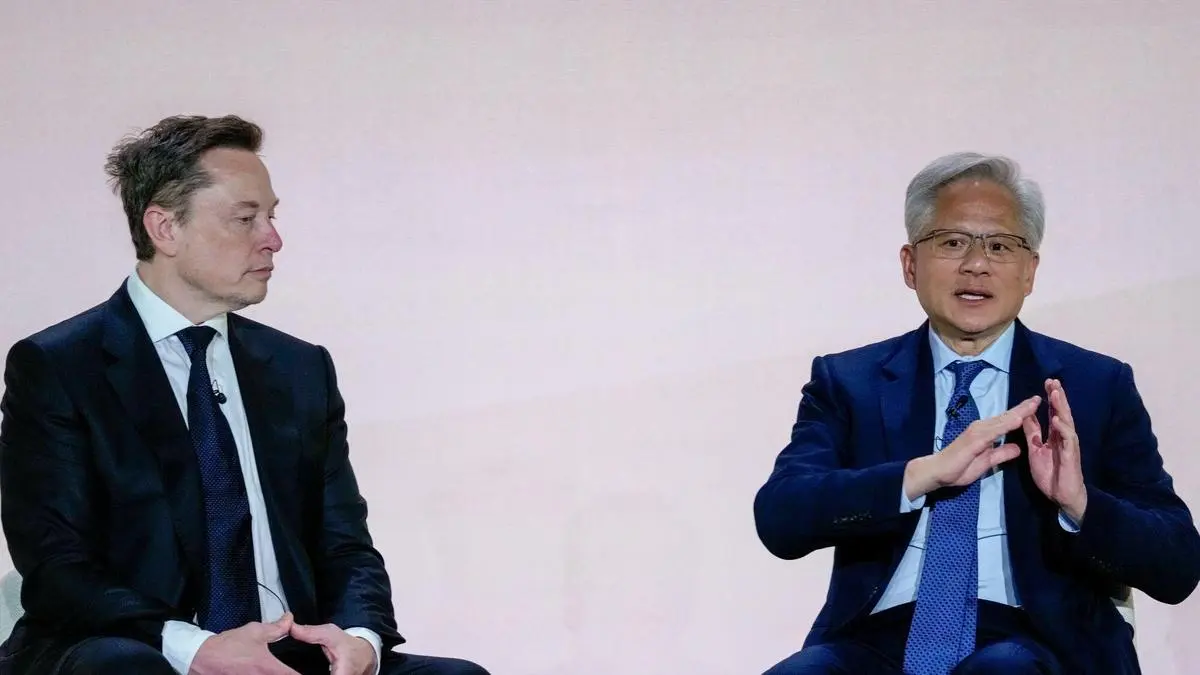
Elon Musk backs Jensen Huang’s return as Nvidia CEO amid leadership controversy
Elon Musk met Nvidia chief Jensen Huang after Huang’s reinstatement following a brief resignation linked to an alleged scandal. The meeting, shared on social media, underscores industry support for Huang’s leadership at a critical time for AI hardware.
AI
AI Agents Poised to Transform Indian Workplaces, Says KPMG‑CII Report
A KPMG and CII study finds 93% of Indian business leaders plan to adopt AI agents, with 59% already using them for automation. The shift demands new skill sets, extensive upskilling and a focus on directing AI rather than just using it.

AI
Anthropic launches Claude Duet AI agent for professionals in India
Anthropic has opened its Claude Duet AI agent to Indian users through waitlists and public betas. The proactive assistant can manage emails, schedules, forecasts and more, while requiring user approval for sensitive actions.
Comments
Comments appear immediately. Profanity is blocked, and readers can report comments for moderator review.
Loading comments…