U.S. Adds Seven Southeast Asian Firms to Entity List Over AI Chip Concerns
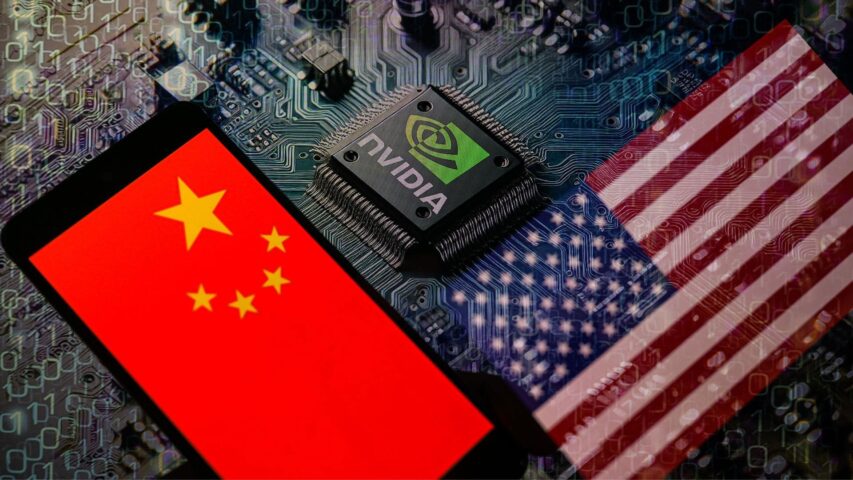
The U.S. Commerce Department placed seven companies from Singapore, Malaysia and Thailand on its Entity List, tightening export controls on American semiconductors, software and technology amid fears of AI chip diversion.
Source: Electronics For You
Key takeaways
- Seven firms in Singapore, Malaysia and Thailand are now on the U.S. Entity List.
- Suppliers must obtain licences, with a presumption of denial, to ship covered items.
- Megaspeed, a Singapore cloud provider, is accused of diverting Nvidia AI chips to China.
- The move highlights challenges in tracking AI hardware once it enters regional cloud networks.
The U.S. Commerce Department has placed seven companies from Singapore, Malaysia and Thailand on its Entity List, tightening export controls on American semiconductors, software and related technology. The action reflects growing concerns that advanced AI chips could be diverted to unauthorised users, a risk that directly impacts the global supply chain and the ability of regional firms to access cutting‑edge hardware.
Companies added to the Entity List
The seven firms now face stricter licensing requirements under the U.S. Export Administration Regulations. Any American supplier that wishes to ship covered items must first obtain a government licence, and each application will be evaluated with a presumption of denial. This makes it significantly harder for the listed companies to receive new shipments of advanced chips or related software.
Megaspeed’s alleged role
Among the entities is Megaspeed, a Singapore‑based cloud computing provider. U.S. investigators have been probing the company since 2024 for possible violations of export‑control rules, specifically the suspected diversion of Nvidia AI chips to China. Nvidia itself stopped dealing with Megaspeed in June 2025 after placing the firm on an internal no‑sell list following a request for transaction records. Megaspeed has denied any wrongdoing, and the investigation remains ongoing.
Why the move matters for the semiconductor industry
The decision underscores a broader dilemma for semiconductor suppliers: tracking the ultimate destination of chips after they enter regional cloud networks is increasingly complex. Historically, vendors could verify the immediate buyer, but authorities now worry about secondary users who may gain access through cloud services. This shift could lead to more rigorous compliance checks, higher costs for suppliers, and potential delays for legitimate customers in Southeast Asia.
Potential impact on the region’s tech ecosystem
- Companies may face longer lead times for AI hardware.
- Local cloud providers could see increased scrutiny and licensing costs.
- Start‑ups relying on advanced AI chips might need to explore alternative suppliers.
- Universities and research labs could encounter tighter export‑control procedures.
- Regional partnerships with U.S. chip makers may be re‑evaluated.
What it means for students and parents
- Career planning: Students interested in AI hardware or cloud computing should be aware of heightened regulatory scrutiny, which may affect internship and job opportunities with firms linked to U.S. technology.
- Education resources: Schools may need to adjust curricula to include export‑control compliance basics for engineering and computer science programs.
- Family budgeting: Families purchasing AI‑enabled devices should anticipate possible price increases due to supply‑chain constraints.
- Future projects: Young innovators planning AI projects might consider using open‑source hardware or locally sourced components to avoid licensing hurdles.
The addition of these seven firms to the Entity List signals a more aggressive U.S. stance on AI chip export controls, especially where there is a risk of diversion to restricted destinations. For semiconductor suppliers, the challenge now lies in developing robust tracking mechanisms that extend beyond the initial sale. For the broader Southeast Asian tech community, the move could reshape supply dynamics, prompting both caution and innovation in how AI hardware is sourced and deployed.
The situation remains fluid as investigations continue and companies adapt to the new licensing regime. Stakeholders across the region will need to monitor regulatory updates closely to navigate the evolving landscape of AI chip availability.
Source: Electronics For You
Likes are stored anonymously in this browser.
Related stories
Semiconductors
AMD Radeon RX 9060 XT Sets New GPU Frequency Record
AMD's Radeon RX 9060 XT achieved a world‑record GPU clock speed, highlighting the potential of mid‑range RDNA 4 graphics for performance enthusiasts.

Semiconductors
Diamond Foundry unveils 200‑mm single‑crystal diamond wafer for advanced chips
Diamond Foundry announced a new 200‑mm single‑crystal diamond wafer, D200, aimed at semiconductor packaging, chip cooling and AI hardware, promising higher performance than SiC and GaN.
Semiconductors
India’s chip sector could add over 1 lakh jobs in three years, studies estimate
BCG and CIEL HR estimates point to rapid hiring in India’s semiconductor ecosystem, with strong demand for specialised engineering and manufacturing roles.
Comments
Comments appear immediately. Profanity is blocked, and readers can report comments for moderator review.
Loading comments…